
The Story of Graffiti

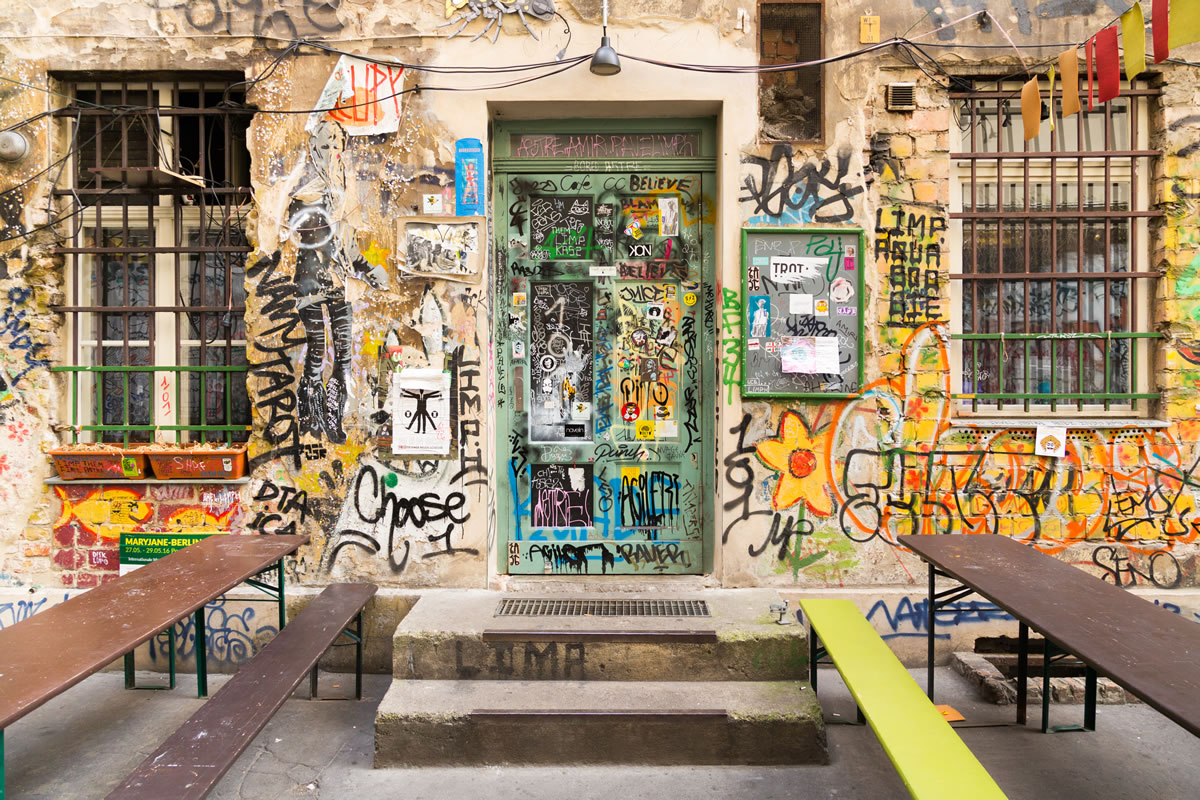
The pace of the grey moving skies across Berlin is only matched by the pace of my feet. Jumping over a puddle, I avoid an equally fast paced man in a dark green turtle neck done up to the eyebrows. The streets round Friedrichshain in Berlin’s East are littered with graffiti, or street art, depending on your persuasion. Each and every inch of reachable, and some unreachable, wall has been decorated in some way, shape or form.
Growing up, I was conditioned to believe that graffiti equalled bad area. Berlin seemed different for some reason. The graffiti had a point. Or maybe it was just my love of the city that blinded me to any other point of view.
But then what is graffiti if not art.
Standing there, looking at layer upon layer of paint, names, symbols, messages half covered and rewritten, it starts to feel less like vandalism and more like conversation. Not always a polite one, but a conversation nonetheless, one that does not ask permission to exist.
And that is where it gets interesting.
Because if graffiti is a form of communication, then it sits in the same space as music, writing, broadcast, anything that carries an idea from one person to another. And historically, those channels have always had gatekeepers, people deciding what gets through, what gets heard, what gets seen.
It is not a new concern.
Plato wrote about it thousands of years ago, warning that art was dangerous precisely because it spreads ideas. Not all ideas are convenient, not all ideas are controllable, and once they are out there, they have a habit of sticking.
Graffiti does not wait for approval. It does not go through a publisher, or a station, or a committee. It appears overnight. A scratch, a scribble, a name, whatever form it takes, it bypasses the system entirely.
No filter, no permission, no control.
Which, depending on your point of view, is either the problem, or the entire point.
In the context of Berlin, it is a little easier to understand.
The tight, humid air in the early morning of August 13th, 1961, the East was segregated, literally overnight, by a barbed wire fence. By the time we get to the 1970s, the wall has progressed from barbed wire to two separate walls, separated by no man’s land.
Put a wall through, dividing a city, and people tend to respond to it.
Obviously a little peeved, the Western Berliners would use the buildings on the Western side, those facing directly into the East, to send messages of hope. Some of these people were children of US service personnel stationed in Berlin during the Cold War.
It became a surface. A place to leave messages, some political, some personal, some just names scrawled quickly before moving on. It was not organised, and it certainly was not approved, but it existed. Constantly changing, layered, rewritten.
And the more you look at it, the more it feels less like a local phenomenon and more like part of something wider.
Because this instinct, to mark a space, to say I was here, to communicate without permission, was not unique to Berlin.
Across the Atlantic, in New York, something remarkably similar was happening, at almost exactly the same time, but for entirely different reasons. Not a divided city in the same physical sense, but one shaped by neglect, by policy, by decisions made far away from the people they affected.
The Cross Bronx Expressway cut straight through communities, dismantling neighbourhoods that had taken generations to build. Under the Nixon administration, large parts of the city were left to decay. What you are left with is not just a physical environment, but a social one, spaces where traditional channels of communication either do not exist or do not work.
And in those spaces, people find other ways.
By the early 1970s, names were already appearing across walls and trains, quick tags, repeated, evolving. It was less about large scale murals and more about presence. Recognition. Being seen.
And then, on August 11th, 1973, in a recreation room at 1520 Sedgwick Avenue in the West Bronx, DJ Kool Herc and his sister Cindy hosted a back to school jam. Often credited as the first hip hop party.
Why all of this seems to happen in August, I have no idea.
Hip hop was not born as a political movement, but it came from the same conditions. The same gaps. The same lack of access to established systems. And much like graffiti, it did not wait for permission.
It just started.
It is easy, looking back now, to tidy it all up. To imagine neat categories, graffiti artists here, hip hop artists there, all part of a clearly defined movement. But it did not look like that at the time.
Early graffiti writers were not necessarily part of what we would now call hip hop culture. They were just kids in cities, responding to their surroundings. Some of them were probably listening to Zeppelin. Others to whatever they could get their hands on. The point is, it was not unified. Not yet.
That came later.
What existed first was the instinct.
To leave a mark.
To be seen.
To communicate without going through anyone else.
Berlin and New York did not copy each other. They arrived at similar expressions independently, shaped by completely different pressures. Like the intelligence of an octopus, something complex emerging more than once, in isolation, because the conditions allowed it.
And as hip hop began to take shape in those same environments, through sound systems, parties, improvised setups, it did not create that instinct. It recognised it.
And then it amplified it.
The same spaces. The same people. The same need to say something without permission.
Graffiti moved across surfaces.
Music moved through speakers.
Different forms, same message.
And maybe that is the point.
Graffiti did not need permission. It did not wait to be understood, and it certainly did not wait to be accepted. It just appeared, on walls, trains, corners of cities that people had forgotten, and in doing so, it forced people to look, to react, to think.
Music has always done the same thing.
It does not ask for context. It does not explain itself. It just arrives, carrying with it the environment it was born from, whether that is a divided city, a neglected borough, or a room full of people trying to make something out of nothing.
What started as scratches on a wall in one city found its way into sound systems in another. Different tools, same instinct. To leave a mark. To say something. To be heard, or seen, or both.
Walking through Berlin, it is hard not to feel like you are moving through a conversation that has been happening for decades. Every wall, every tag, every layer painted over something else, it is all part of it. Nothing ever really disappears, it just gets rewritten.
And maybe that is what stuck with me.
Not whether graffiti is art or vandalism, or whether hip hop started it or adopted it, but the idea that culture does not stay in one place. It moves. It evolves. It gets carried by people, reshaped by cities, and passed on in ways that do not always make sense at the time.
Sometimes it is a mural.
Sometimes it is a track.
Sometimes it is just a name, written quickly, before anyone notices.